
Synthesis and Synthesizers
Published on 06/12/2021


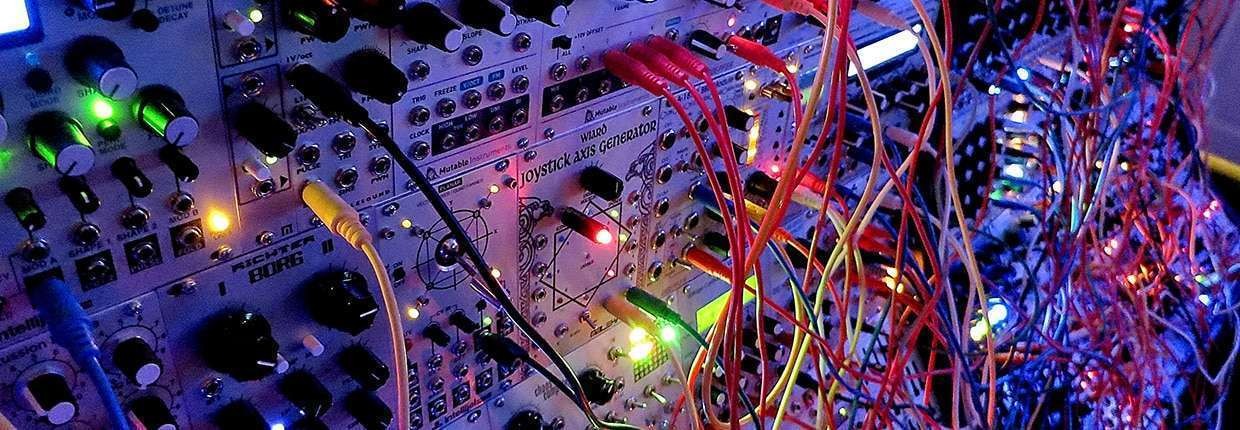

Modular synthesizers are electronic musical instruments composed of independent circuits that work together to generate and transform sound. Their origins can be traced back to the development of electronics in the 20th century, with pioneers such as Don Buchla, who was instrumental in the birth of modular synthesis.
Today, modular synths are back at the center of music production, sound design and electronic music because of their flexibility and ability to create unique sounds.
Underlying these instruments is the concept of modularity: an open system composed of separate elements that can be freely combined.
This approach offers advantages both technical, such as ease of maintenance and upgrading, and creative, allowing total customization of one's setup.
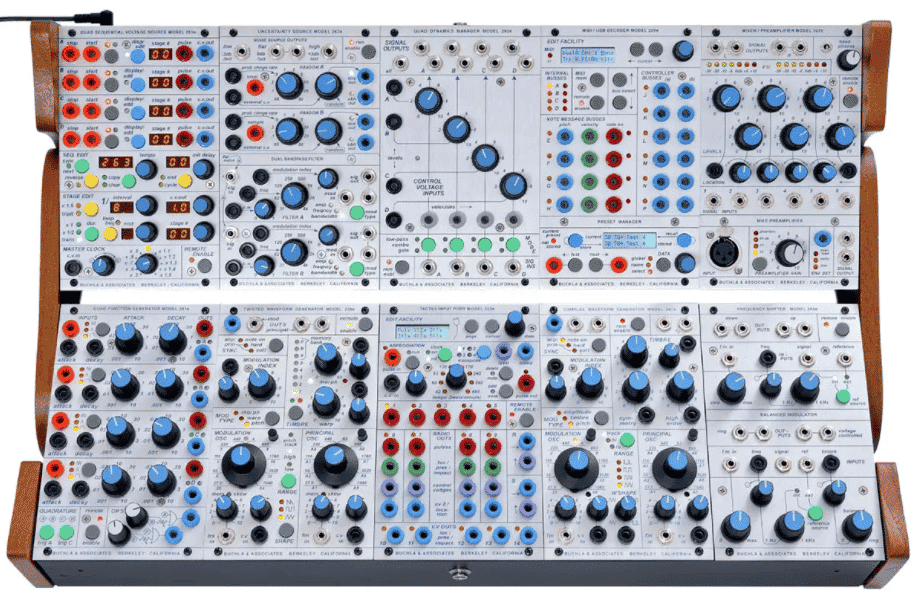
A modular synth is built through modules, each with a specific function. Combining them together creates a fully customized instrument.
The main types of modules are:
Utility modules include fundamental components such as sequencers, controllers and interfaces, which are essential to make the system really perform.
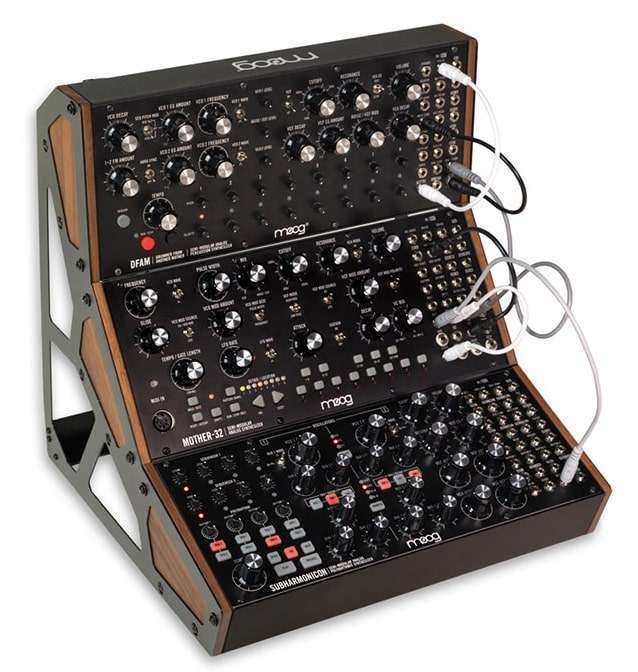
In the modern modular world we also find complex systems and hybrid instruments inspired by the very early experiments in synthesis, such as those developed by Buchla, which still influence the design of contemporary modules. Think of the samplers or semi-modular productions of Moog or other companies.
The real turning point for the popularity of modular synths was the introduction of the Eurorack standard by Dieter Doepfer in 1996.
This standard revolutionized the industry because it made it possible:
Thanks to the Eurorack, it is now possible to create a custom synthesizer, choosing each individual module according to one's sonic needs.
This has directly contributed to the renaissance of modular synths, which are now increasingly popular among musicians, producers and sound designers.
In modular synths, there is no predefined signal path: everything is built through patch cables.
These connections make it possible to handle:
The freedom of connection is total: unconventional routing can be experimented with, turning audio signals into modulations and vice versa.
This approach makes each system:
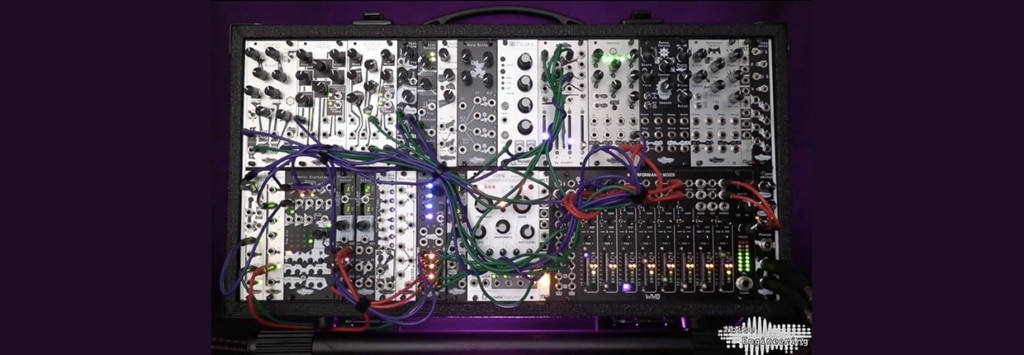
One of the most complex aspects of modular synths is the difficulty in recreating an identical patch after disconnecting the cables.
Recreating the same sound requires time, precision and often detailed notes.
But this is precisely one of the most fascinating elements: each patch becomes a unique, unrepeatable creation, almost like a live performance.
From a technical point of view, modular synths are electronic systems that generate and manipulate signals through interconnected modules.
From an artistic point of view, they represent one of the most expressive tools in electronic music: they enable the creation of complex sound textures, immersive sound environments, and results that are difficult to achieve with traditional instruments.
In this sense, modular synthesizers are not just musical instruments, but true creative ecosystems for sound synthesis.
Join us today and get 5% off your next order!
Empty cart
