
Synthesis and Synthesizers
Published on 16/04/2026


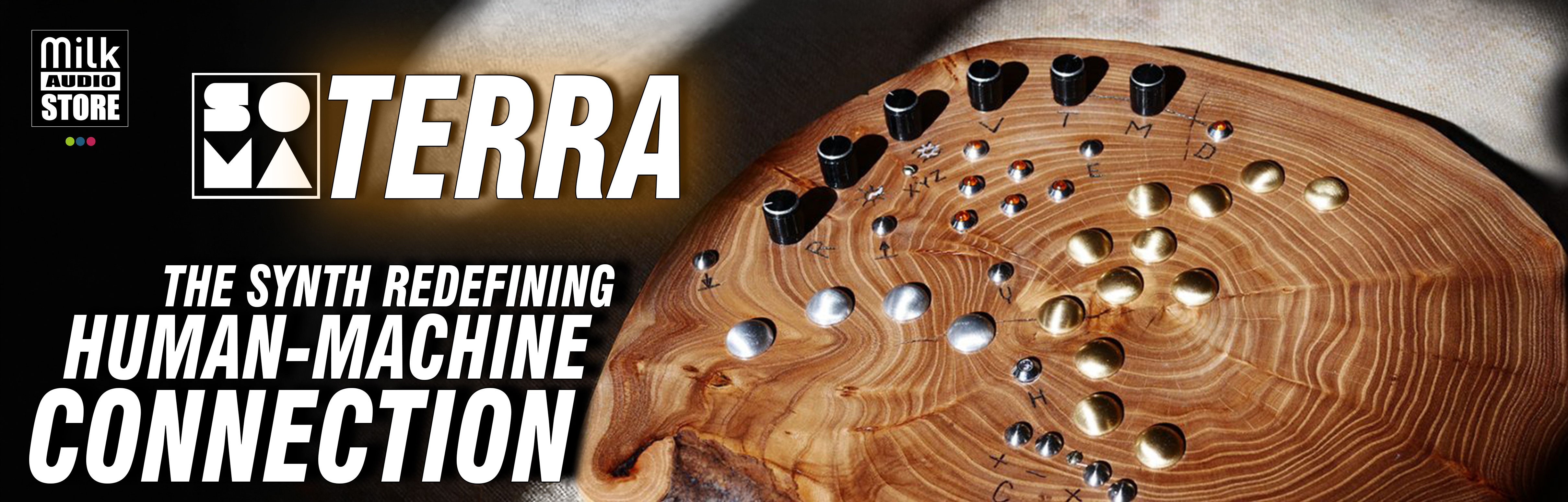

In the contemporary synthesis landscape, which is increasingly oriented toward digital workflows, infinite presets and total control, the Soma Laboratory TERRA arrives as a statement of intent almost against the grain.
It is not an instrument designed for those seeking surgical precision or perfect recall. TERRA is something different: it is a concrete attempt to mend the relationship between human gesture and sound, between technology and sensitivity.
And already from this it is clear that we are not talking about a synthesizer in the traditional sense of the term.
At the heart of TERRA is a concept as ambitious as it is rare: to eliminate the distance between musical intention and sonic result.
Those who have experience with complex synthesizers know this well: often more time is spent programming than playing. Parameters, menus, sub-menus, modulations-all extremely powerful, but also dispersive.
TERRA completely reverses this approach.
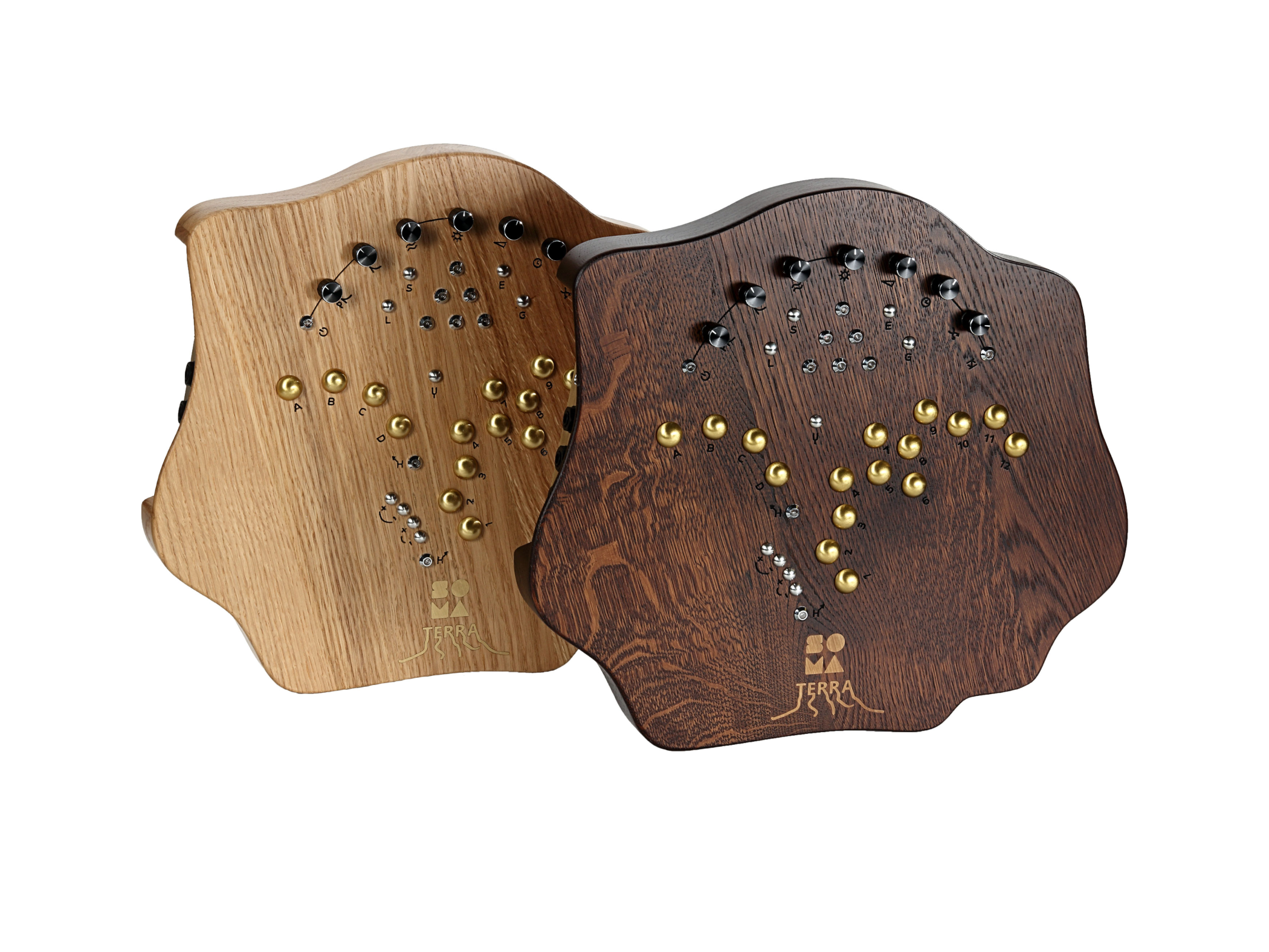
It doesn't ask you to build a sound step by step. It puts you directly in the position of shaping it in real time, with your hands, with your body, with your movement.
It is an instrument that you do not "program": you explore it.
The first impact with TERRA is almost destabilizing. There is no keyboard, no keys, no familiar references.
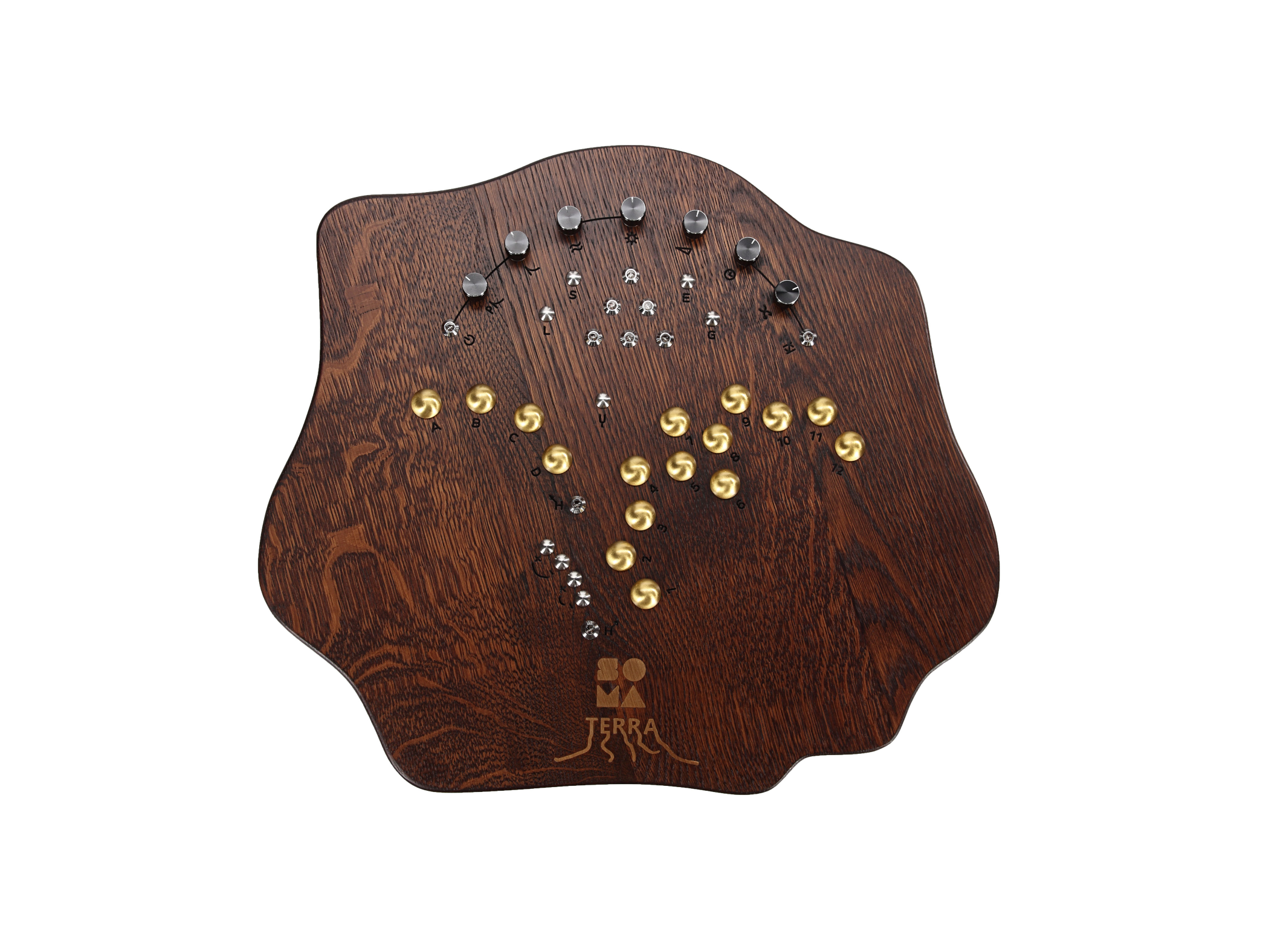
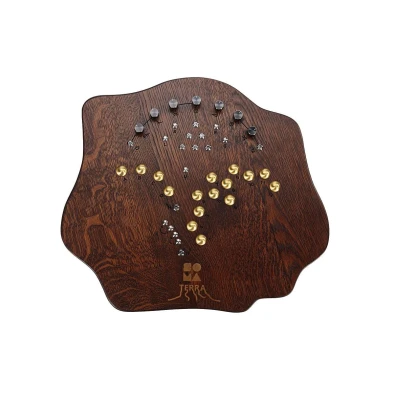
In their place we find a series of metal sensors, ergonomically arranged, designed to fit the human hand rather than visual logic.
And here something interesting happens: after a few minutes you stop "looking for notes" and start feeling the instrument.
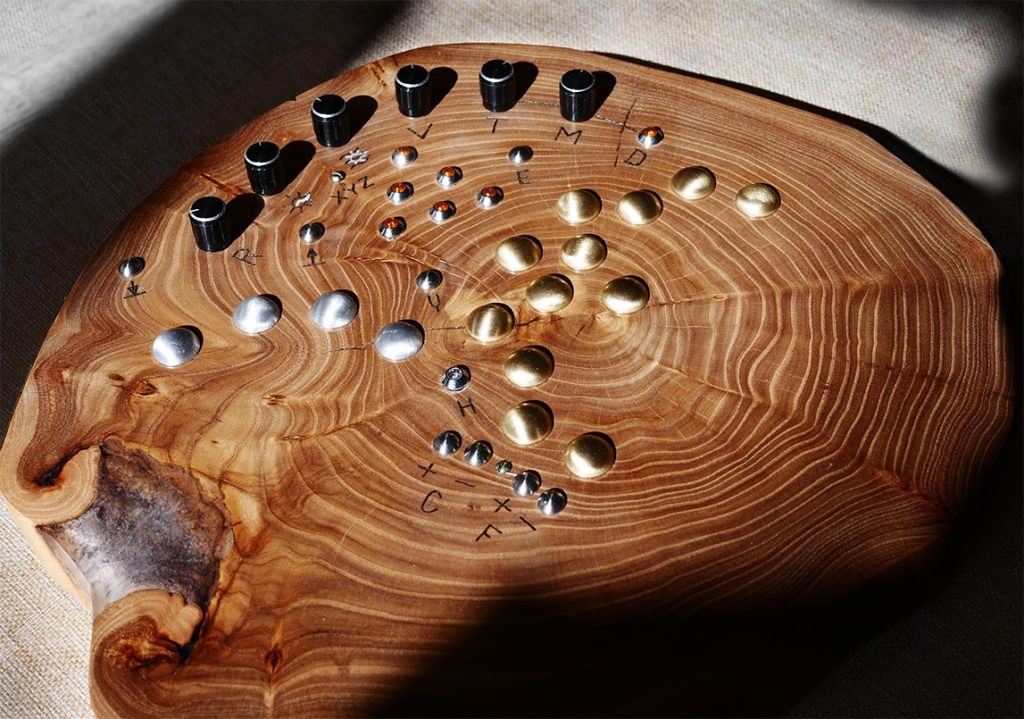
The response to touch is extremely sensitive. It is not only about velocity, but also about pressure and, above all, the contact surface. This allows continuous and organic control of the sound: smooth attacks, smooth transitions, natural timbral variations.
Added to this is a component that completely changes the rules of the game: microtonality.
TERRA allows impressive precision in pitch management, up to 125 steps per semitone. It is not just an advanced function: it is an invitation to break out of traditional scales and build new musical languages.
One of the most fascinating aspects is the pitch shifting system. Through dedicated sensors, you can instantly transpose what you are playing into different configurations: octaves, intervals, microtonal variations.
But the real strength is not the function itself as much as the way it is used.
You don't have to stop, you don't have to change settings. The pitch becomes part of the performance, something that evolves along with the gesture.
This opens up completely new scenarios, especially for those used to thinking in terms of the traditional keyboard.
One of the most distinctive elements of TERRA is the built-in motion sensor.
It is not a creative addition, but a fundamental part of the instrument. The sound can be modulated simply by tilting, moving or oscillating the synth body.
It may seem unusual at first, but after a while it becomes natural.
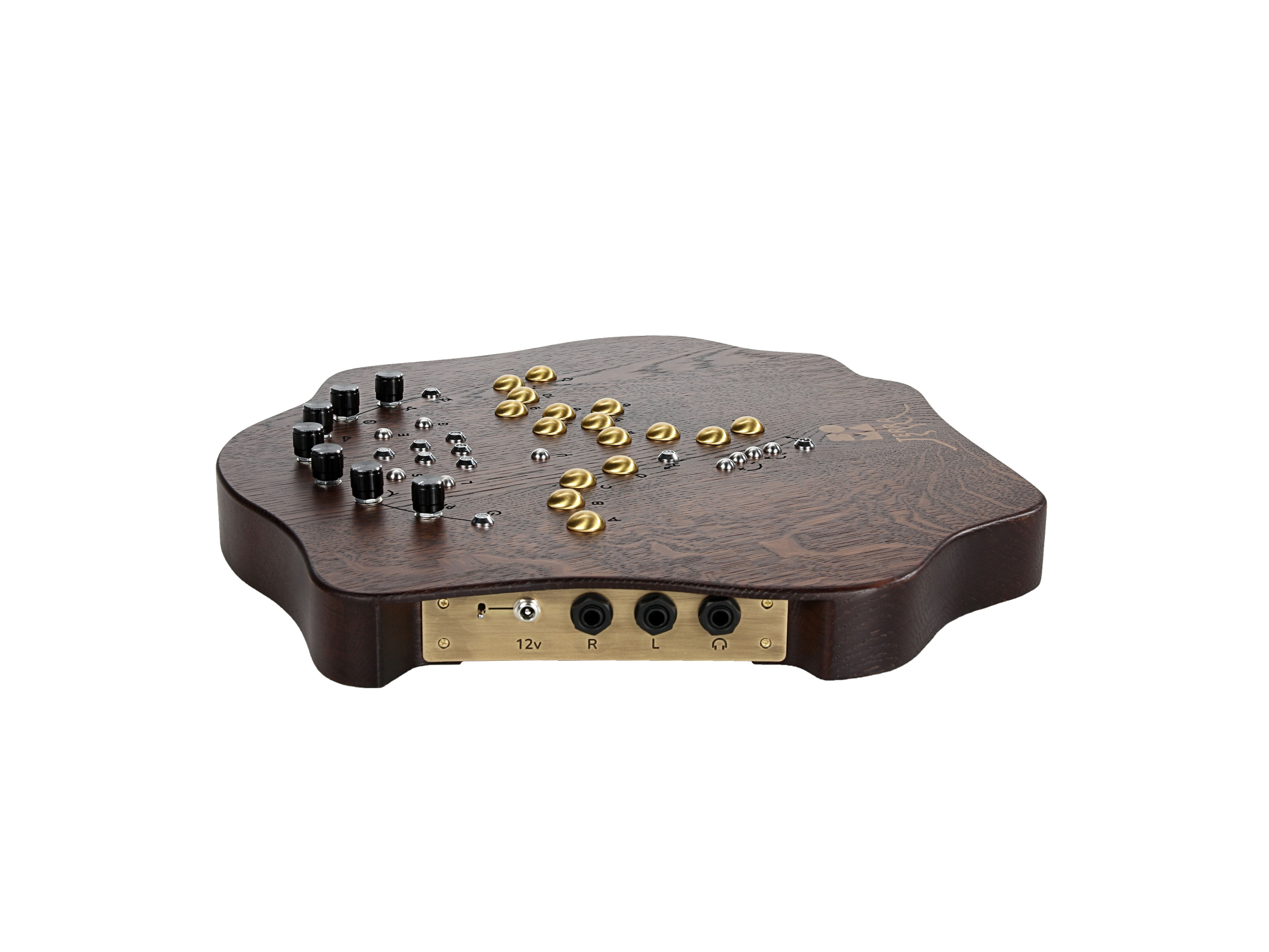
It is like adding a new expressive dimension, something beyond the hands.
In a way, TERRA forces you out of the staticity typical of electronic production and into a more performative, almost physical dimension.
Beneath the intuitive surface, TERRA hides an extremely complex sound structure.
Its 32 synthesis algorithms are not simple presets, but true independent instruments, each with its own identity and internal logic. It is not a matter of building a sound from scratch, but learning to interact with each algorithm as if it were a different instrument.
This approach completely frees you from the logic of technical sound design and brings everything back to the musical plane.
And then there is the sound.
Despite the digital generation, the presence of a high-quality analog stage, with discrete components and level conversion, returns a surprisingly warm, full, and three-dimensional result.
It is one of those cases where technology disappears and only perception remains.
In an age dominated by screens and graphic interfaces, TERRA makes a radical choice: it eliminates the display altogether.
In its place is a system of LED indicators and essential controls designed to be immediate and unobtrusive.
This may seem limiting at first, but it is actually one of its strengths.
There is nothing to distract you. No menus to get lost in.
Just you and the instrument.
The design also tells a lot about TERRA's philosophy.
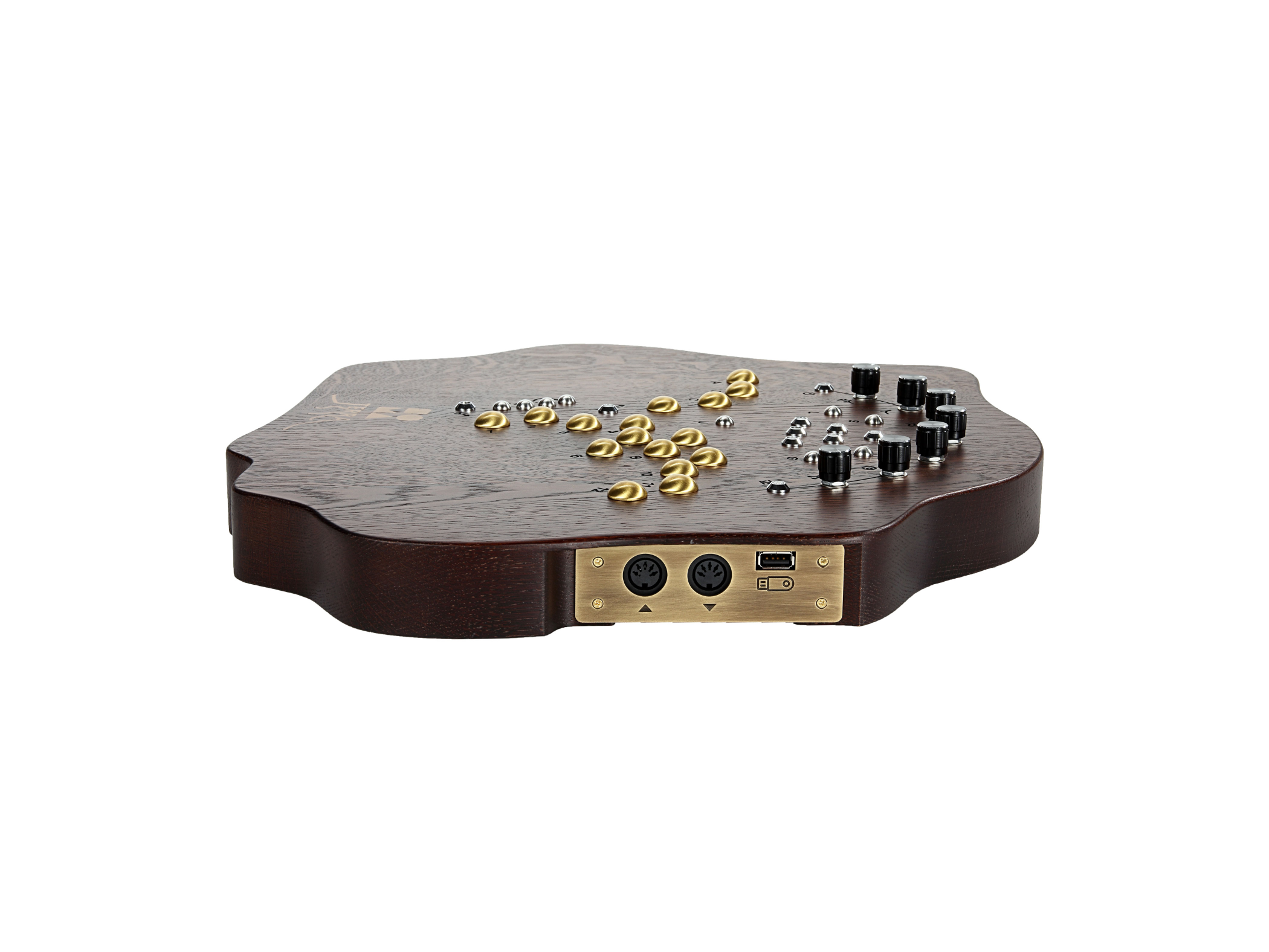
The solid wood body, the brass finishes, the slight variations between units-all contribute to the feeling of having something alive in your hands.
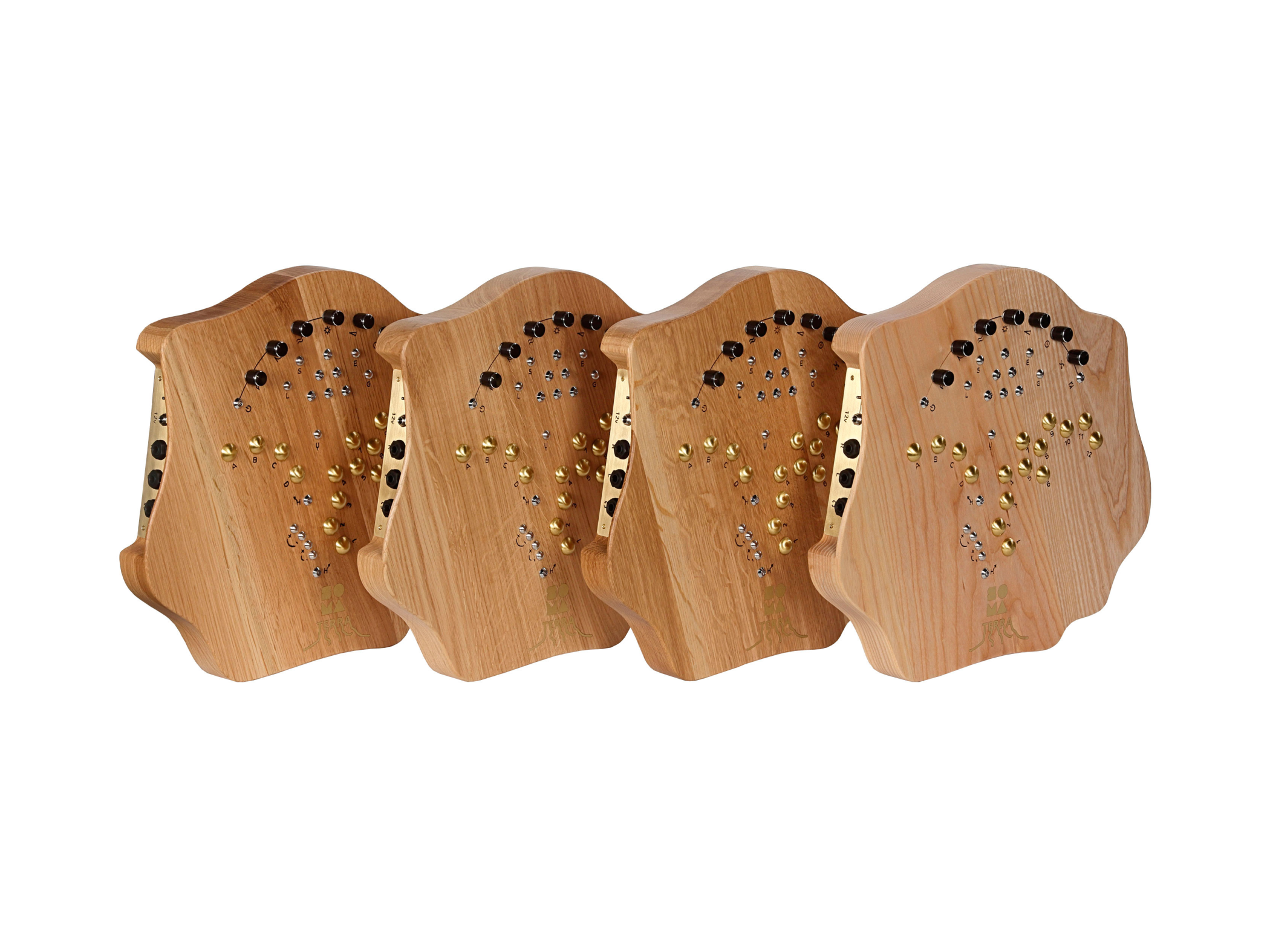
It is not an impersonal industrial object, but an instrument with its own identity.
And that, in the context of the user experience, really makes a difference.
There is one aspect that is difficult to describe until you experience it: the feeling of immersion.
TERRA does not invite you to "do something," but to be inside the sound.
Time seems to slow down, attention becomes focused, gesture becomes more conscious.
It is an instrument that requires presence, but gives back just as much in terms of expressiveness.
It is not a universal instrument, and it is fair to say that clearly.
TERRA is perfect for those looking for new sonic languages, working with live performances, or interested in experimentation. It is less suitable, however, for those who need traditional workflows or work in a rigidly structured way in DAWs.
The Soma Laboratory TERRA does not try to be better than other synthesizers.
It simply plays a different game.
It is an instrument that challenges established habits and proposes a concrete alternative: less control, more relationship. Less programming, more expression.
And that is precisely why, in the current landscape, it represents one of the most interesting and radical tools one can encounter.
Related Products
€ 1.577,87 Ex VAT
 For European customers, select your country to view the correct price including VAT.

€ 1.598,36 Ex VAT
For European customers, select your country to view the correct price including VAT.
Join us today and get 5% off your next order!
Empty cart