






Synthesis and Synthesizers
SOMA Flux: The Synthesizer You Play Without Touching It
Published on 27/02/2026



What is SOMA Flux really?
SOMA Flux isnot a synthesizer in the traditional sense of the word. It's not a drum machine, it's not a MIDI controller, it's not a theremin - although it resembles something of all these worlds.
Flux is a performative electromagnetic instrument designed to transform movement in space into sonic control. It is an expressive analog interface that translates hand and body position into changes in voltage (CV) and dynamics.
It is not about programming.
It's about playing the air.
Here is a live performance we recorded at the recent Superbooth 2025 FLUX + PIPE!
Electromagnetic interaction: how it works
Flux uses electromagnetic fields generated by built-in antennas to detect the distance and movement of the performer's hand.
The result:
- continuous non-contact control
- immediate and organic response
- highly expressive modulation
- physical and gestural performance
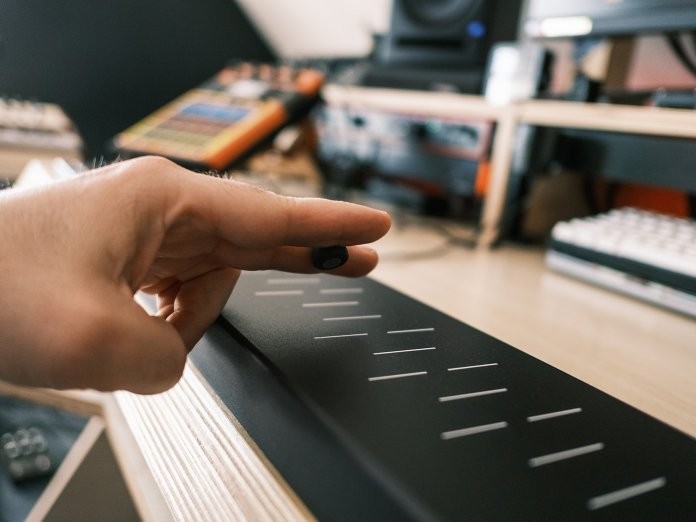
Image by Terrence O'Brien.
Unlike digital instruments based on optical sensors or accelerometers, Flux works in the pure analog domain. The response is direct, fluid and unquantized. This means that every micro-movement counts.
An instrument, not a controller
Many might consider it a CV controller. In reality, Flux is closer to a self-contained musical instrument.
It can:
- generate CV signals
- modulate analog synthesizers
- control Eurorack parameters
- interact with analog effects
- create autonomous drones and textures
But its real strength lies in itscontrolled unpredictability. Flux introduces a performative dimension reminiscent of acoustic instruments: the slightest variation in gesture changes the sonic result.
Performance and physical presence
Flux is deeply connected to the musician's body. It is not a neutral interface: it is an instrument that reacts to physical presence.
The interaction depends on:
- body position
- distance from the antennas
- surrounding environment
- electromagnetic fields present in the space
This makes each performance unrepeatable.
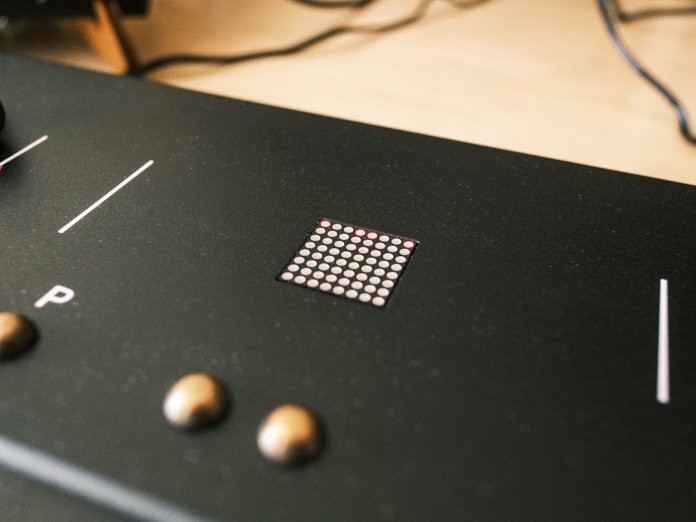
Image by Terrence O'Brien.
It is an ideal instrument for:
- live experimental
- audiovisual performances
- ambient and drone
- radical improvisation
- sound art
Integration with modular systems
Flux finds its natural habitat in the Eurorack world. Thanks to its CV outputs it can:
- control pitch
- modulate cutoff
- drive VCAs
- manipulate delays and reverbs
- generate slow, organic modulations
In a modular studio, Flux becomes a living source of control, an alternative to LFOs and sequencers. In a live set, it transforms the performer into an integral part of the system.
Construction and design
Like all Soma Laboratory instruments, Flux has a basic, functional and industrial design:
- sturdy construction
- high-quality analog components
- minimal but powerful interface
- raw, straightforward aesthetics
There is nothing superfluous. Every element serves the performance.
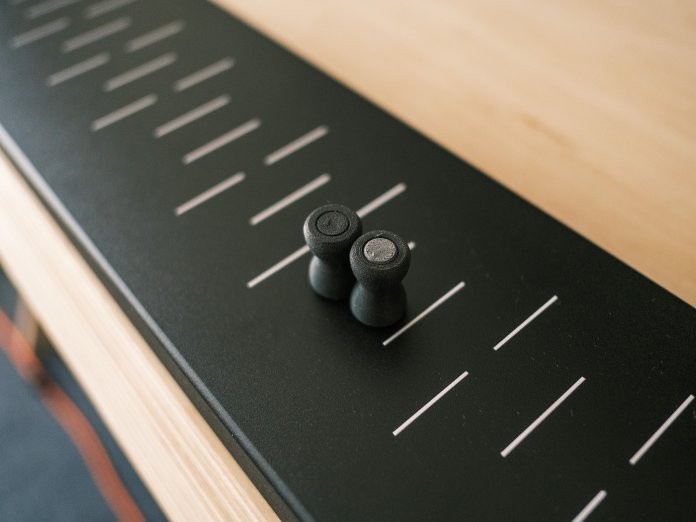
Image by Terrence O'Brien.
Flux is not for everyone
It is important to make this clear. Flux is not a tool for seekers:
- presets
- memories
- immediate sounds
- conventional workflow
It is a tool for those who want to explore gestural control, physical interaction, and analog expressiveness.
It requires listening. It requires practice. It requires presence. But it returns a unique musical experience.
Who it is recommended for
Flux is ideal for:
- experimental electronic performers
- sound designers
- audiovisual artists
- ambient and drone composers
- modular musicians
If you are interested in the interaction between body, space, and sound, Flux is a tool that can radically change your approach.
Conclusion
SOMA Flux is not simply a device: it is an extension of the body.
In the landscape of contemporary electronic instruments, it represents one of the most radical interpretations of the idea of analog performance.
It does not merely generate sound. It turns gesture into musical energy. And that, today, is something rare.
Related Products
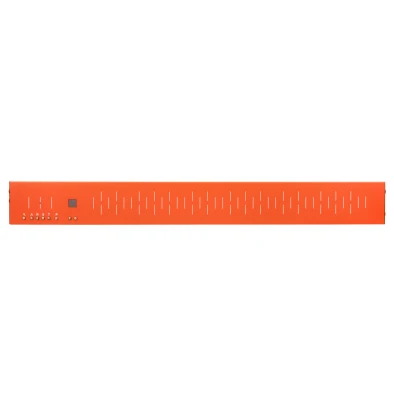
Soma Laboratory FLUX ORANGE
€ 1.333,33
Ex VAT
 For European customers, select your country to view the correct price including VAT.

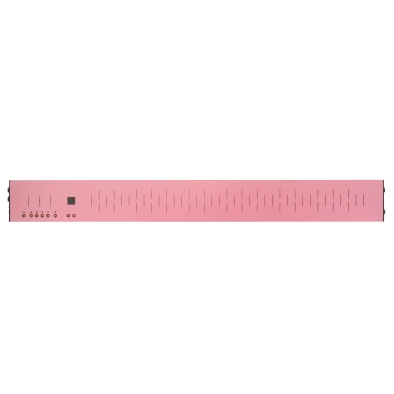
Soma Laboratory FLUX PINK
€ 1.333,33
Ex VAT
For European customers, select your country to view the correct price including VAT.
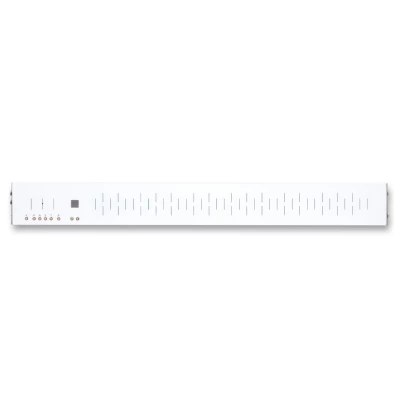
Soma Laboratory FLUX WHITE
€ 1.333,33
Ex VAT
For European customers, select your country to view the correct price including VAT.
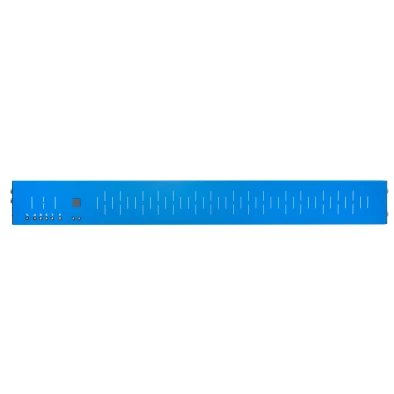
Soma Laboratory FLUX ZANZIBAR
€ 1.333,33
Ex VAT
For European customers, select your country to view the correct price including VAT.
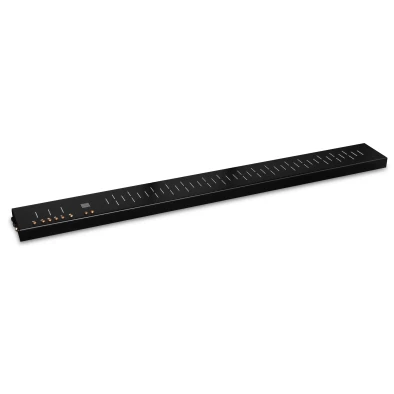
Soma Laboratory Flux
€ 1.333,33
Ex VAT
For European customers, select your country to view the correct price including VAT.