Recording, Mixing and Mastering
Published on 27/10/2026



Tony De Gruttola, arranger, producer, guitarist, and singer, explains how he works with Ollo Audio headphones: the open-back X1s for mixing and the closed-back R1s for every recording session. Two different tools that he now considers indispensable in his studio.
There are products you choose by reading the specs, and others you discover almost by chance—because someone you trust insists you try them out. Tony’s story with Ollo Audio falls into the second category, and it’s the story of a professional who spends hours every day in the studio arranging, producing, recording, and mixing.

It all began about two years ago, while mixing a musical that Tony had arranged and produced. The session took place in the studio of sound engineer Fabrizio Argiolas, who had been collaborating with Ollo Audio for some time and insisted that Tony try out the X1s. It didn’t take long for something to click.
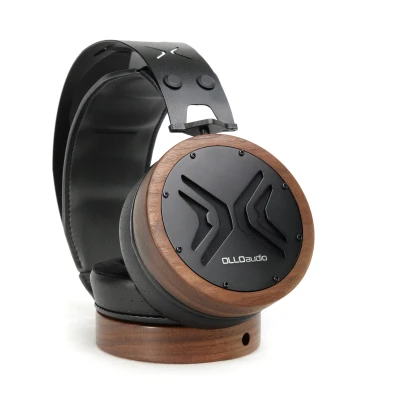
“I fell in love with them immediately. First of all, because of the incredible design, which in this case isn’t just about aesthetics: it corresponds to one of the headphones’ resonance characteristics. I’ll always be grateful to Fabrizio for introducing me to these wonderful headphones and letting me try them out.”
Since that first listening session, his relationship with the brand has grown increasingly close, to the point that today Tony is also a collaborator with Ollo Audio.
The X1s are open-back over-ear headphones designed for production and mixing, featuring 50 mm dynamic drivers mounted in American walnut ear cups and a stainless steel headband. Each pair is individually measured and calibrated, and the calibration can be applied via the USC II plugin or loaded as an EQ on DSP-equipped audio interfaces. The goal is a response that’s as flat as possible, regardless of the room’s acoustics.
And it was precisely this neutrality that impressed Tony from day one:
“What impressed me was the headphones’ response—the total transparency and the feeling of mixing with speakers. They’re one of the very few pairs of headphones that let me mix without missing my monitors. Today, I couldn’t imagine mixing anything without using the X1s.”
There’s one aspect of the X1 that Tony ranks right up there with transparency, and it’s something that matters to anyone who spends many hours working on the same project: how they perform at low volumes. Many headphones lose body and definition when you turn the volume down, forcing you to turn it back up and strain your ears.
“Another thing that really impressed me is the incredible sound at low volumes. These are among the few headphones that let you mix quietly while maintaining dynamics, sound quality, and transparency. When you spend so many hours on a project, I think this is a feature that headphones absolutely must have.”
Mixing at lower levels means ending the day with fresher ears and clearer judgment, without sacrificing your ability to hear the details.
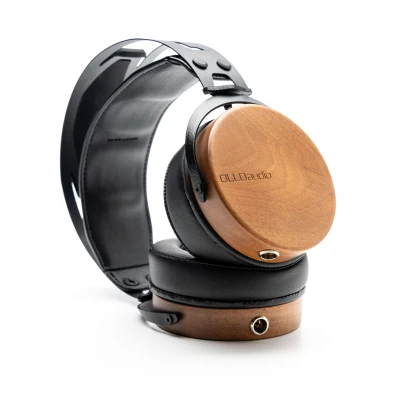
If the X1 is the tool for mixing, the R1 is the tool for recording. These are closed-back headphones with wooden ear cups, 50 mm dynamic drivers, and approximately 10 dB SPL isolation, which reduces feedback from the playback into the microphones during recordings. The “U”-shaped frequency response, with a bit more energy in the low and high frequencies, is designed to give musicians an immersive listening experience while they play or sing. All components—from the drivers to the ear pads to the cables—are replaceable.
For Tony, who produces, sings, and records guitars, bass, and vocals in the studio, the R1s have become his go-to headphones for every session:
“For each of these tasks, I wear the R1, which gives me incredible sound and immerses me in the music I’m playing. This ensures maximum concentration during recording, but also provides that emotional connection you only get when the listening experience is optimal. I couldn’t do without these headphones either.”
Anyone who records electric guitars through headphones is familiar with the problem: with distortion and overdrive effects, many headphones actually emphasize the harshest frequencies, making the listening experience tiring and far removed from the real sound of the cabinet. This is where, as a guitarist, Tony notices the most distinct difference.
“It’s incredible how good the guitar sounds through these headphones. It really feels like I’m playing through the monitors. I don’t miss the amp. And most of all—and I’m happy about this—I don’t hear those annoying frequencies that most headphones reproduce when playing with distortion, overdrive, and so on.”
Tony’s approach is simple and reflects the philosophy behind Ollo Audio’s design of the two headphones: each stage of the workflow requires a different listening experience.
During recording: R1
Closed-back headphones, isolation from the microphone, and an immersive sound that aids concentration and interpretation—from vocals to distorted guitar.
During mixing: X1
Open-back, calibrated headphones—transparent and reliable even at low volumes—so you can make mixing decisions without missing your studio monitors.
Two headphones that don’t overlap but complement each other, accompanying a track from the first take all the way to the final mix.
The Ollo Audio X1 and R1 are available at the Milk Audio Store. If you’d like to find out which one best suits your workflow, our team is here to help.
Related Products
€ 310,67 Ex VAT
 For European customers, select your country to view the correct price including VAT.


€ 327,05 Ex VAT
For European customers, select your country to view the correct price including VAT.
Join us today and get 5% off your next order!

Empty cart
